You know the work. You didn’t sign up for the admin.
Most trades businesses run lean by necessity. The problems below aren’t unique to yours — they’re industry-wide. That doesn’t make them acceptable.
Paper job sheets that disappear
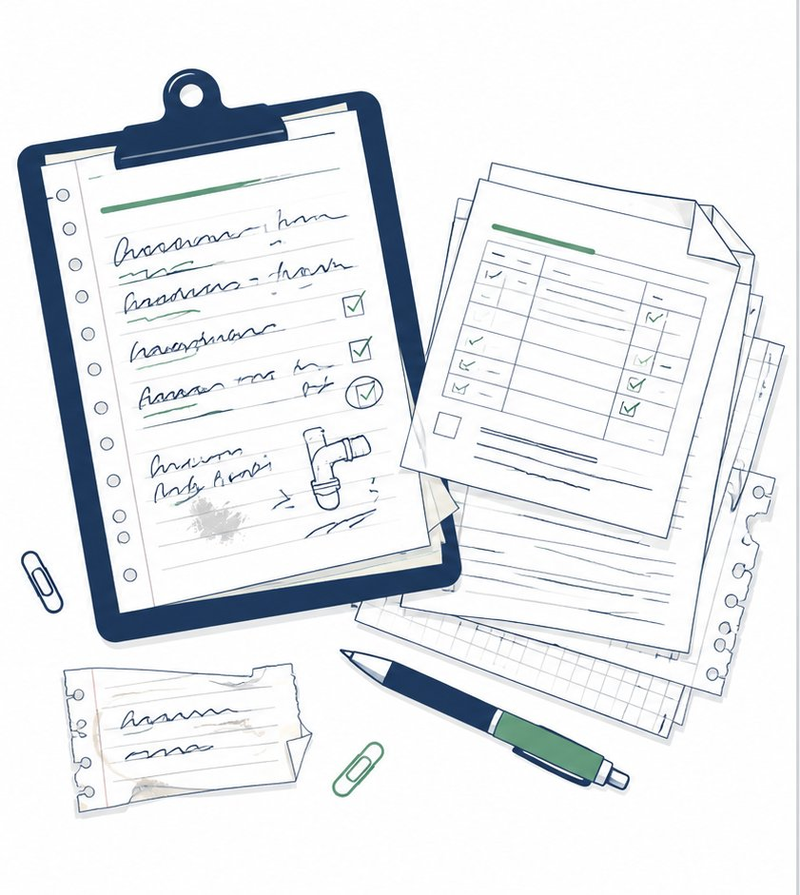
Written in the field, lost in the truck, misread in the office. One missing form and the invoice is wrong or delayed. Multiply that by every job.
Scheduling that runs through you
You are the dispatch system. Every change, every reschedule, every “where do I go next” call comes to you personally. That stops when you take a day off.
Safety compliance on paper clipboards
OSHA forms, daily site logs, incident reports — handwritten, inconsistently completed, and a nightmare when the inspector shows up. One audit away from a real problem.
Invoicing that waits for the office
Job finishes Friday afternoon. Invoice goes out Monday. Payment arrives in 30–45 days. That gap is your money sitting in someone else’s account.
Customer communication by memory
Appointment confirmations sent manually if at all. Follow-ups forgotten. Customers calling to ask if you’re still coming. This costs jobs more than anything else on this list.
No view of what’s actually happening
Which jobs are done, which are stalled, which haven’t been invoiced yet, which crew is where — it’s all in your head. That only works until it doesn’t.
Systems that connect the job site to the office automatically.
Every build is specific to how your business actually runs. These are the most common starting points for trades companies — what gets built always matches what’s actually broken.
Digital job sheets & field forms
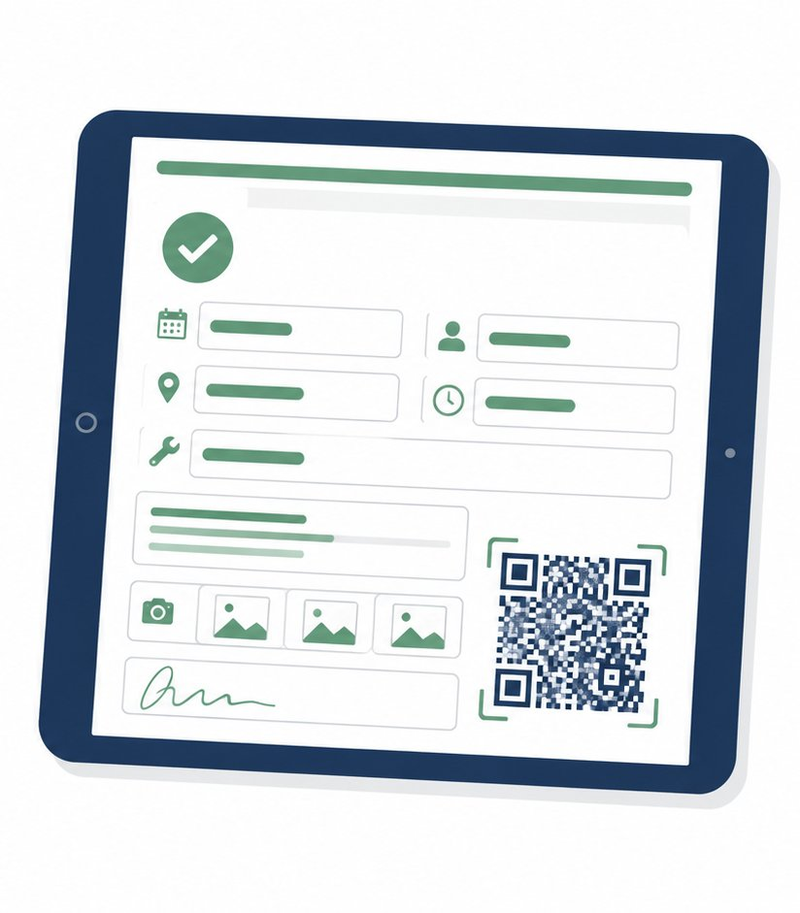
QR code on the job site. Crew scans in, completes the form on their phone, submits. Data routes to the office automatically. No paper, no re-entry, no lost forms. Works offline if signal is bad.
Scheduling & dispatch automation
Crew gets their schedule automatically. Changes push in real time. Customers get automated confirmations and reminders. You stop being the dispatch system and start being the owner.
Safety & compliance workflows
Daily OSHA logs, site safety checklists, incident reports — all digital, time-stamped, auto-filed. When the inspector shows up, you hand them a device instead of a folder of loose paper.
Job completion → invoice automation
When the job form is submitted, the invoice generates and sends. No waiting for Monday. No manual entry. Payment comes faster because the ask goes out faster.
Customer communication sequences
Booking confirmation, day-before reminder, arrival notification, follow-up after the job. Automated and consistent. Customers stop calling to ask if you’re coming — they already know.
Operations dashboard
Jobs by status, crew by location, invoices outstanding, revenue by week — one view, always current. You stop running the business from memory and start running it from data.
A construction company’s daily OSHA compliance went from paper clipboards to a QR scan.
Daily safety reports, site logs, and incident documentation — all on paper, inconsistently completed, manually filed. We replaced the entire process with a QR-based digital system. Crews scan in, submit, done. Everything routes and files automatically. When the inspector showed up, they handed over a tablet.
Read the full case study →Ever again.
Tell us where
the time is going.
One conversation. You describe what’s slow, what’s manual, what falls through the cracks. We tell you what’s fixable and what it would take. No obligation, no proposal before we’ve talked.
Find out exactly where your operation is leaking time and money.
Answer a few questions about how your shop runs today. You’ll get an instant breakdown of what’s manual that shouldn’t be, what software you’re underusing, and what a fixed version looks like. No email required to see your results.
Take the free Service Trades Assessment →Auto repair operation? Take the Automotive Assessment instead →